










Navassa Island: Uninhabited Island (La Navase)
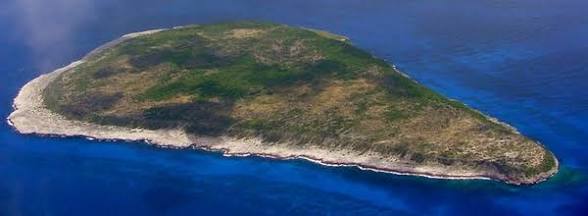
Navassa Island, known in Haitian Creole as La Navaz, or in French La Navase is a small, uninhabited pear-shaped island located approximately 40 miles (64 km) west of Haiti’s Tiburon Peninsula. Despite its modest size of just 2 square miles (5.2 sq km), this limestone plateau is the subject of one of the longest-running territorial disputes in the Western Hemisphere. To understand Navassa today, one must look past its rugged cliffs and see it as a flashpoint of colonial history, industrial greed, and unparalleled ecological significance.
A Sovereignty Challenge: The 1801 Precedent
The roots of the Navassa dispute are deep and legalistic. Haiti’s claim to the island is not merely proximity-based; it is constitutional. Ever since the 1801 Constitution under Toussaint Louverture, and subsequent versions following independence in 1804, Haiti has explicitly included Navassa within its national boundaries. From the Haitian perspective, Navassa was part of the territory ceded by Spain to France in the Treaty of Ryswick (1697), and therefore became part of the sovereign state of Haiti upon its revolution.
However, the United States challenges this sovereignty through the Guano Islands Act of 1856. This federal law allowed American citizens to take possession of unclaimed islands to mine guano (seabird droppings) for fertilizer. In 1857, American sea captain Peter Duncan claimed the island, and the U.S. government backed this claim despite formal protests from the Haitian government in 1858.
The Guano Era and the Great Labor Conflict
By the mid-19th century, guano was “white gold,” essential for rejuvenating the exhausted soils of American farms. The Navassa Phosphate Company was formed to extract the island’s rich deposits. This period remains a dark chapter in the island’s history. The workforce consisted largely of African American laborers from Baltimore who lived in conditions described as “virtual slavery.”
The tension culminated in the Navassa Island Riot of 1889. Workers, pushed to their limit by brutal foremen and isolation, revolted, resulting in the deaths of five officers. The legal aftermath reached the U.S. Supreme Court in the landmark case Jones v. United States (1890). The court ruled that Navassa was indeed under U.S. jurisdiction, solidifying the American administrative claim that persists today, even though the phosphate mines were eventually abandoned after the Spanish-American War in 1898.
A Biological Treasure to Preserve
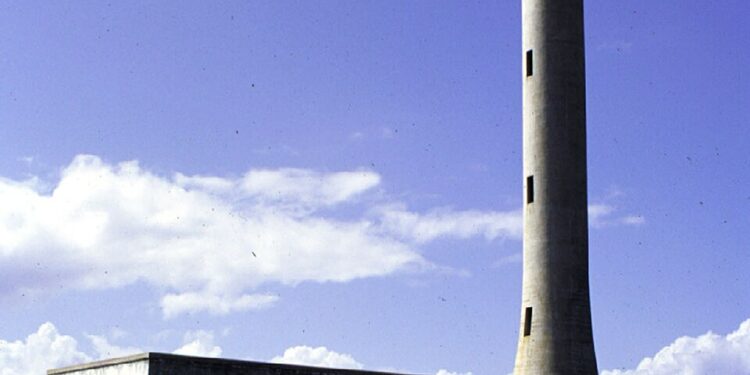
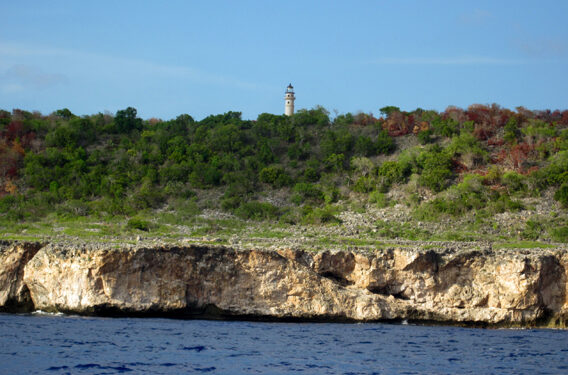
Because Navassa has remained uninhabited by humans since the automation of its lighthouse in 1929, it has evolved into a “time capsule” of Caribbean biodiversity. The island’s isolation has prevented the introduction of many invasive species, allowing endemic life to flourish in a way that is impossible on larger, more populated islands.
Exceptional Biodiversity and Endemic Species
- Terrestrial Life: Scientists have identified nearly 100 species of spiders on the island, many of which are endemic. The island is also home to the Navassa Anole and the Navassa Curly-tailed Lizard.
- Marine Ecosystems: The surrounding coral reefs are among the healthiest in the Caribbean. Because there is no local runoff or industrial pollution, the water clarity is exceptional, supporting over 250 species of fish.
- Botany: The island is covered in a dry forest of Metopium brownei (poisonwood) and short grasses, including four endemic plant species that are found nowhere else on the planet.
A History of Conflicts and Modern Claims
In the 20th and 21st centuries, the dispute has shifted from guano to maritime rights and national pride. In 1998, the U.S. Department of the Interior took over administration of the island, declaring it a National Wildlife Refuge. Haiti immediately issued a formal protest, reiterating that Navassa is the “tenth department” of Haiti (now categorized under the Nippes or Sud department).
International groups have occasionally attempted to mediate, but the U.S. maintains its “unorganized, unincorporated territory” status. This creates a unique legal vacuum: while the U.S. manages the environment, the international community often views the Haitian claim as historically and geographically valid.
A Fascinating Journey Despite Disputes
For modern travelers, visiting Navassa is a challenge. Landing is strictly prohibited by the U.S. Fish and Wildlife Service to protect the fragile ecosystem. However, private boat charters from Les Cayes or Anse-d’Hainault in Haiti allow visitors to witness the island’s sheer limestone cliffs, which rise 30 to 50 feet straight out of the sea.
Divers who stay within the international maritime boundaries can experience some of the most pristine “blue water” diving in the world. The absence of a permanent human population means the underwater topography—cliffs, caves, and coral pillars—remains exactly as it was centuries ago.
A Unique Place to Preserve for the Future
Navassa Island is more than a rock; it is a symbol. For Haiti, it represents territorial integrity and the struggle against colonial-era laws. For the United States, it is a strategic environmental outpost. For the world, it is a biological gem that must be protected from the looming threats of climate change and illegal overfishing.
As we move further into the 21st century, the hope is for a collaborative management agreement. Such an agreement would allow both nations to contribute to the scientific study of the island while ensuring that its unique “Galapagos” status remains untarnished for future generations.